Sigsaly: Churchill's top secret hotline to the President
SIGSALY: The Secret Communication Link Between Churchill and the US President
During the Second World War, the Churchill War Rooms served as a clandestine nerve center where the British government processed vital intelligence and formulated strategic decisions. While the public can now tour these historic offices, some areas remained secret ultra-secret even to the staff working within the underground complex.
The Necessity of Secure Communication
Before the United States officially entered the conflict in December 1941, Prime Minister Winston Churchill sought a way to maintain an intimate and secure line of communication with President Franklin D. Roosevelt.
At the time, communication options were limited:
- Standard Telephony: Private, but not truly secret.
- Scrambler Phones: Models like the
A-3provided some security, but were still vulnerable to interception. - Encrypted Telegrams: The primary method for high-security correspondence.
- Censored Calls: Phone conversations were monitored by censors who would abruptly terminate the line if sensitive information was leaked.
"The need for a truly unbreakable voice link led to the birth of one of the most advanced technological projects of the era."
Enter SIGSALY: The "Green Hornet"
In October 1940, Bell Telephone Laboratories in New York launched a clandestine initiative known as Project X (later dubbed SIGSALY or "The Green Hornet"). This system represented the absolute cutting edge of 1940s engineering.
How the Technology Worked
The system functioned by converting human speech into a digital format and masking it with noise.
In mathematical terms, the signal could be thought of as the combination of the digitized voice and a random noise component : To the German interceptors, the resulting signal sounded like nothing more than unintelligible static.
Operational Constraints
Using SIGSALY was not as simple as dialing a number. It required absolute synchronization between the two terminals.
- Synchronized Playback: Both ends had to play an identical record on a large turntable.
- Strict Timing: The records lasted exactly 12 minutes.
- Scheduling: Because of the synchronization requirement, calls could not be spontaneous; they had to be pre-arranged.
Logistics and Global Deployment
The scale of SIGSALY was immense, both in terms of cost and physical size.
| Feature | Detail |
|---|---|
| Cost per Terminal | $1,000,000 (1943 USD) |
| Weight | (50 tonnes) |
| Total Terminals | 12 |
| Key Locations | Pentagon, Algiers, Australia, Philippines, London |
The London Installation
The UK terminal was hidden in a highly unusual location: the sub-sub-basement of Selfridges department store in central London. From this hub, secure lines extended to:
- The US Embassy
- 10 Downing Street
- The Cabinet War Rooms
In the War Rooms, the extension was concealed within a small cupboard designed to look like a toilet, reserved exclusively for Churchill.

Usage and the "Special Relationship"
Churchill and Roosevelt first utilized the SIGSALY link in April 1944. While they continued to rely heavily on encoded text messages, the voice link was invaluable.
LOG: SIGSALY SESSION
-----------------------------------
User A: PM Winston Churchill
User B: President Franklin D. Roosevelt
Status: SECURE / ENCRYPTED
Duration: [Scheduled]
-----------------------------------
While the leaders used it occasionally, senior Allied military planners utilized the Selfridges terminal far more frequently to coordinate with Washington. Over the course of the war, the 12 terminals facilitated at least 3,000 conversations.
Transition to Truman
Following Roosevelt's passing, Churchill used the system to communicate with Harry S. Truman. One particular conversation lasted over two hours, focusing on the geopolitical landscape of Europe following the imminent Axis defeat.
Conclusion: A Symbol of Alliance
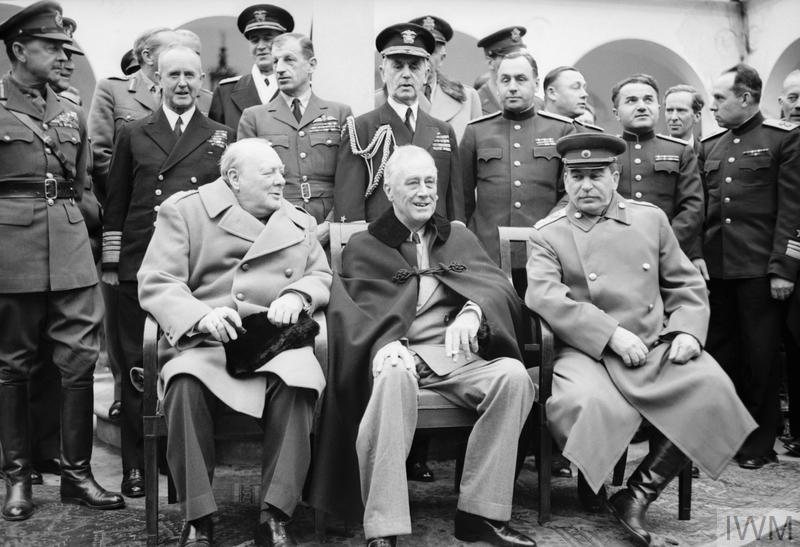
The existence of SIGSALY was more than just a technical achievement; it was a testament to the "Special Relationship" between the US and the UK. The willingness of the United States to ship 50-tonne machines, spend millions of dollars, and deploy specialized signallers to Britain underscores the depth of the alliance.
Despite occasional friction and differing opinions between their military and political hierarchies, the friendship between Churchill and Roosevelt—and later Truman—was cemented by this cutting-edge link, ensuring that the leaders of the free world could speak freely as they worked to defeat their common enemies.