I Know Why the Mathematicians Weep
I Know Why the Mathematicians Weep
By Derek Thompson Reflections on Technological Grief
Recently, the mathematical world was blindsided when OpenAI unveiled hundreds of new mathematical discoveries. These proofs—covering fields such as logic, theoretical computer science, and number theory—had remained unsolved by the most brilliant human minds for decades, and in some cases, centuries.
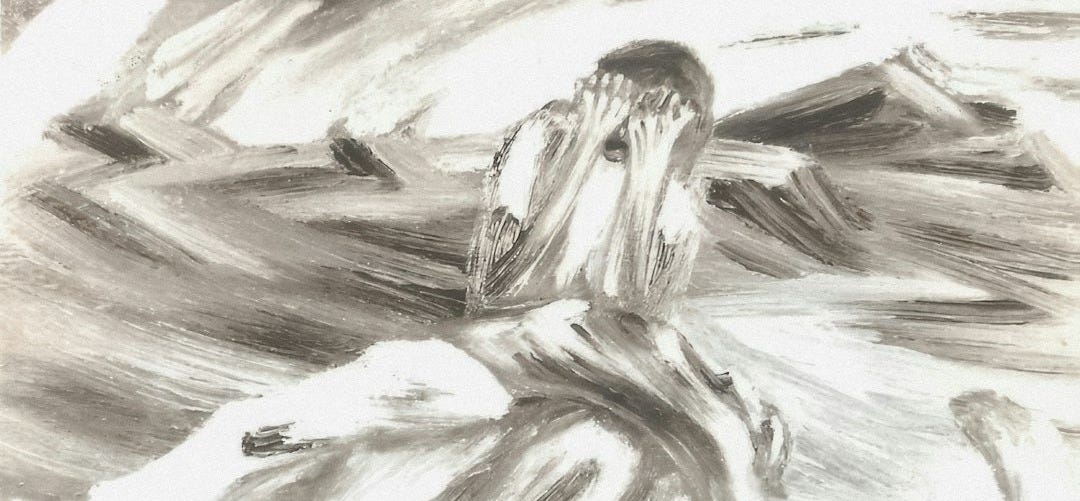
The fallout within the community has been a volatile cocktail of shock, resentment, and profound sadness.
"Tuesday night, I cried and it woke up my daughter," admitted Hugo Duminil-Copin, a 2022 Fields Medalist, following the October announcement. "They have annihilated my field of research."
Steven Strogatz, a Cornell mathematician and author, echoed this sentiment during a conversation with Wired:
"People are using language like ‘they’re strip-mining our subject’ or ‘they’re nuking the landscape.’ The feeling is disorientation. And there is enormous grief."
The Nature of the Loss
I wanted to explore this "technological grief" to determine if it was merely a case of bruised egos—like a child watching a sibling knock over a carefully constructed block tower—or if it was something more existential.
The reality is that mathematicians are weeping today because the machine demolished their tower first. However, this is a preview. Tomorrow, the "fallen blocks" may belong to:
- Economists
- Physicists
- Illustrators
- Writers
While I don't subscribe to the alarmist view that hundreds of millions of jobs will vanish in five years, I am a realist. We are witnessing a violent collision between a technology that generates intelligence and a human culture that views intellect as the primary source of dignity, purpose, and self-worth.
What Defines Humanity?
To understand Steven's pain, we must ask a fundamental question: What actually makes humans unique?
We are the most intelligent species and highly social, but we aren't the only ones with those traits. Our uniqueness lies in the multiplication of these two capacities.
The Compounding Effect
Human intelligence is designed for imitation and iteration. We copy our peers and then tweak the results. Because we are social, this "copy-and-tinker" cycle spreads across generations.
Consider the contrast:
- Chimpanzees: In West Africa, they have used stones to crack nuts in the exact same manner for years.
- Humans: In that same window, we evolved from .
We don't just craft or converse; we blend the two into a self-building culture.
Science: Craft vs. Conversation
Science is more than a job; it is a mode of attention. It treats the universe as a "cosmic attic" filled with locked treasure chests. The scientist's goal is to find the right keys to reveal the gems inside.
- The "Giant" Perspective: Isaac Newton viewed science as "standing on the shoulders of giants," an infinite human pyramid.
- The "Slayer" Perspective: Richard Feynman saw it as "the belief in the ignorance of experts"—a process of challenging the status quo.
In both views, science is not just about the answer, but about the relationship between the discoverers.
The Silence of Archimedes
When I asked Steven why he cried, he spoke of Archimedes. Two millennia ago, Archimedes approximated the value of by calculating the areas of numerous small polygons within a circle:
Archimedes wrote to Eratosthenes, noting that there would always be future discoverers to add to the theorems they had found. To Strogatz, this is the heartbeat of mathematics.
"I feel like Archimedes is writing to me... saying, ‘I can’t solve these things, but maybe you people in the future can stand on my shoulders.’ That is a very emotional, existential thing."
A cynical tech-optimist might dismiss this as "guild protection" or ego. While some may indeed be mourning their status or wasted years, there is a deeper tragedy at play.
The Great Erasure
The mathematicians feel that an alien, disembodied force is reading burning Archimedes' letters and dancing in the debris.
| Aspect | Human Science | AI Science |
|---|---|---|
| Process | A multi-generational conversation | Instantaneous computation |
| Value | The journey of discovery | The final proof/output |
| Connection | Standing on shoulders | Replacing the shoulders |
| Nature | Emotional and transcendent | Algorithmic and indifferent |
When OpenAI solves hundreds of proofs, it completes the "treasure hunt" (the craft), but it kills the "hunt" itself (the conversation).
The AI's "To-Do" List:
- Solve number theory conjectures
- Crack theoretical CS bottlenecks
- Map logical paradoxes
- Maintain the human spirit of inquiry
The machine has mastered the code of the universe:
def solve_math(problem):
    return proof # Instant result
But in doing so, it has interrupted a thousand-year-old human dialogue.