Making chicken transparent using Dorito dust
Making Chicken Transparent Using Dorito Dust
By Casual Physics Enjoyer | Oct 17, 2026
"Thank you Adaobi for such a wonderful suggestion."
My brilliant friend, Adaobi Adibe, shared a fascinating research paper regarding the process of rendering biological tissues transparent.
In the study titled “Achieving optical transparency in live animals with absorbing molecules,” the researchers demonstrated that biological tissues—specifically chicken breast—could be made transparent by immersing them in a solution of tartrazine.
The "Dorito" Connection
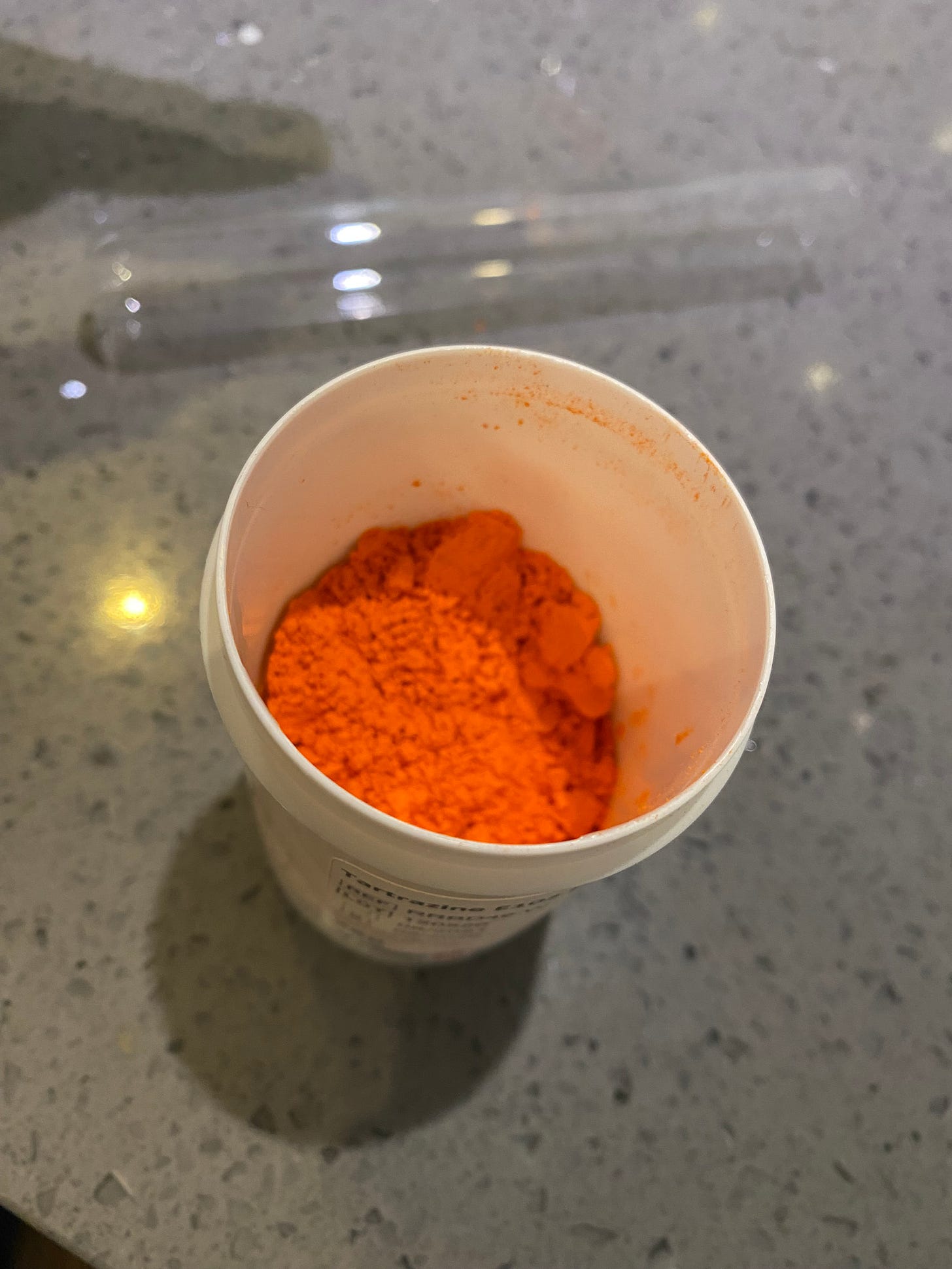
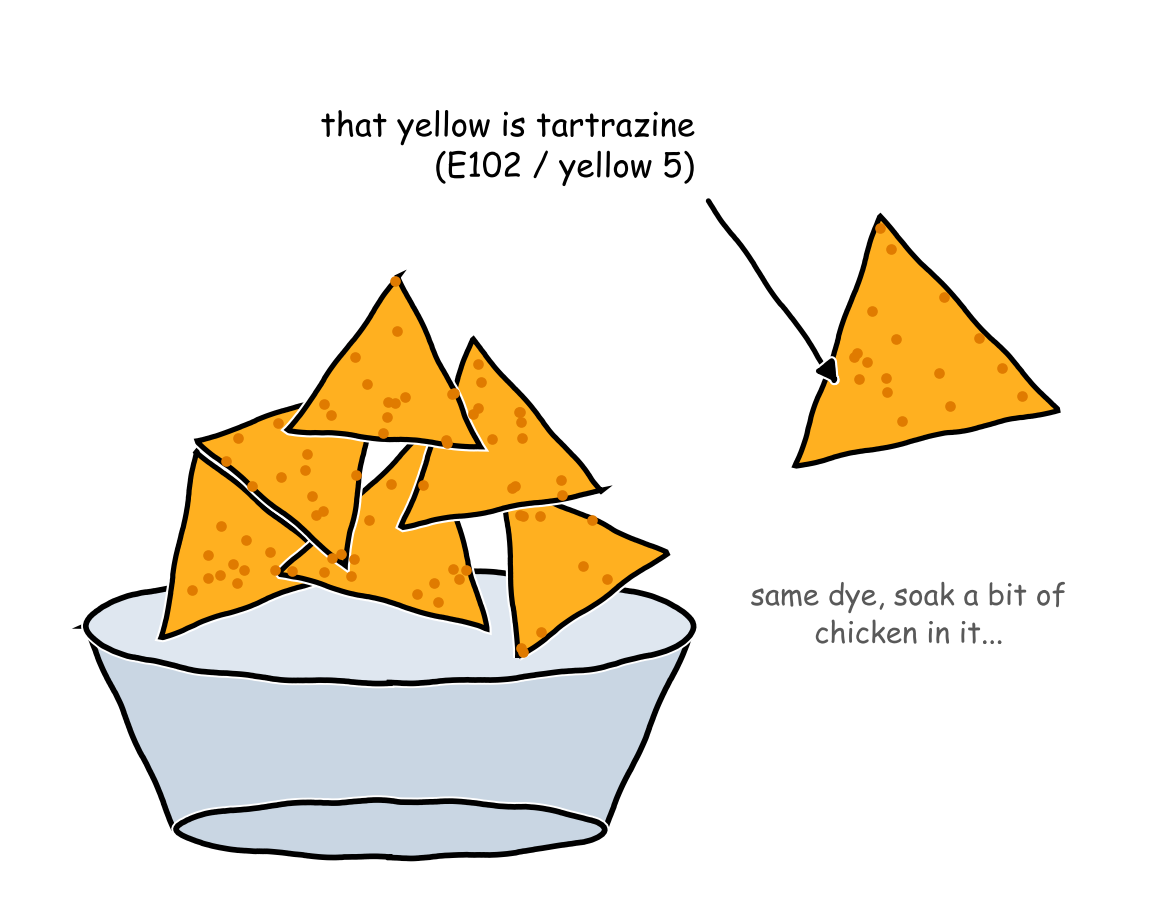
For those unfamiliar, tartrazine is the vivid yellowish-orange food coloring commonly found in Doritos. To test this, I decided to replicate portions of the protocol using chicken breast and tartrazine.
🧪 Experimental Phase 1: The Warm-Up
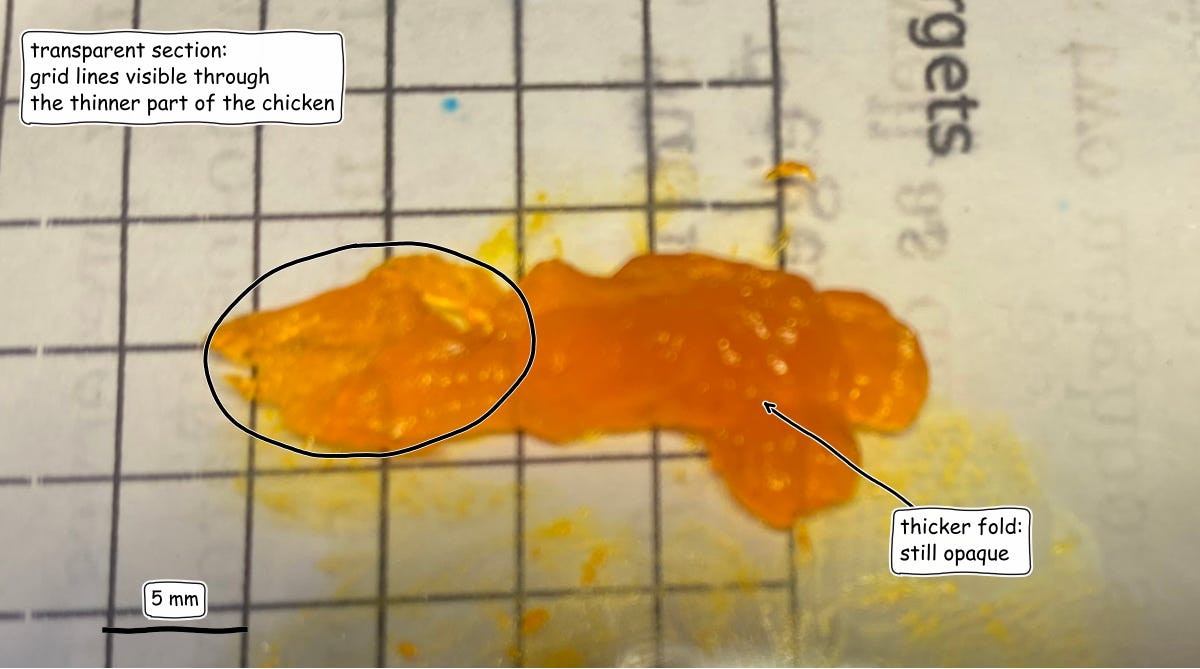
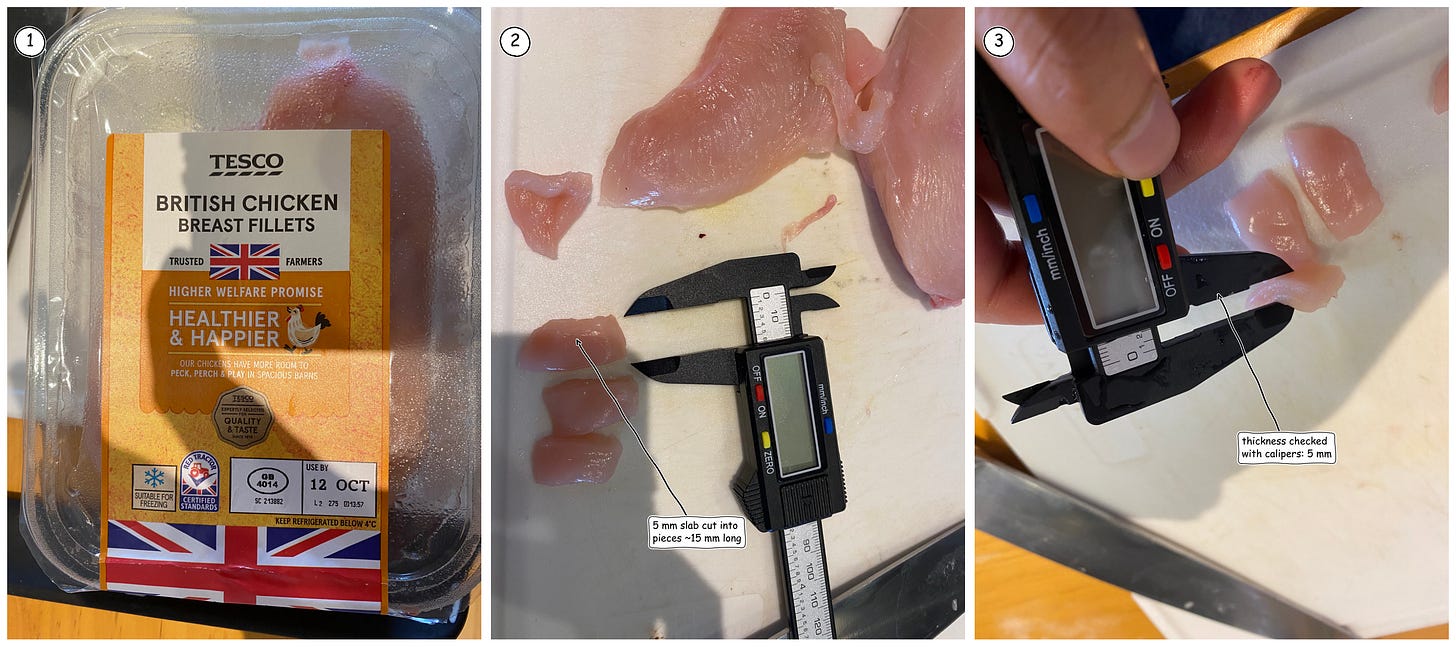
I began by soaking a chicken breast slice in a ~0.19 M tartrazine solution for 6 hours at room temperature. I used a sample approximately 2mm thick (cut from a 5mm slice).
Observations:
- Texture: Remained the same to the touch.
- Visuals: The chicken acquired a translucent, gummy-bear-like quality.
- Transparency: Partial, though not as complete as the results in the original paper.
I wanted to follow the paper's exact protocol The original paper utilized at with a machine shaker, but I lacked the equipment and a way to perform this safely.
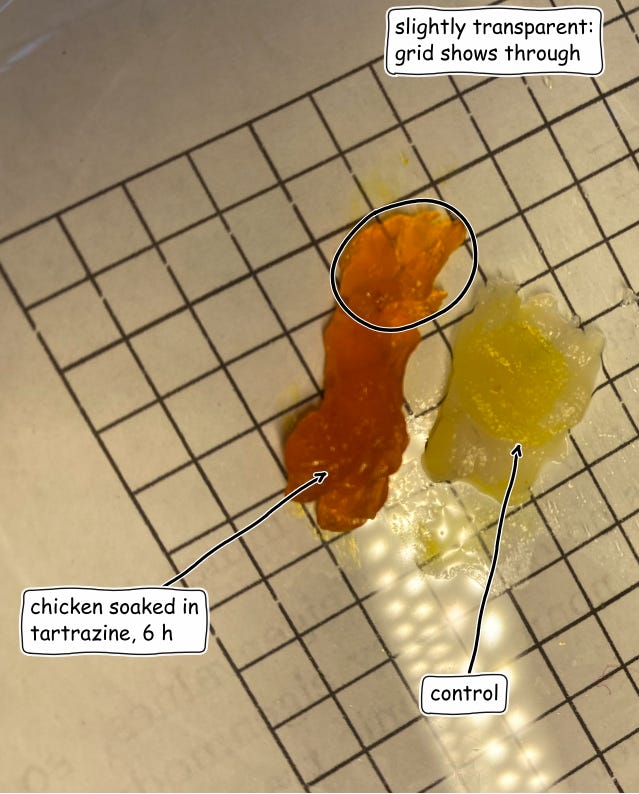
As seen above, the sample on the left (treated) shows some transparency—the grid is visible through the tissue. The sample on the right is the water control (slightly yellow due to accidental dust contamination). It honestly looks appetizing enough to chew, if not for the risk of Salmonella.
🔬 The Science of Transparency
The prevailing theory is that the absorbance properties of tartrazine modify the refractive index of water. By aligning the refractive index of the water with that of the lipid and protein solutions in the tissue, light scattering is reduced, making the object transparent.
Solution Preparation
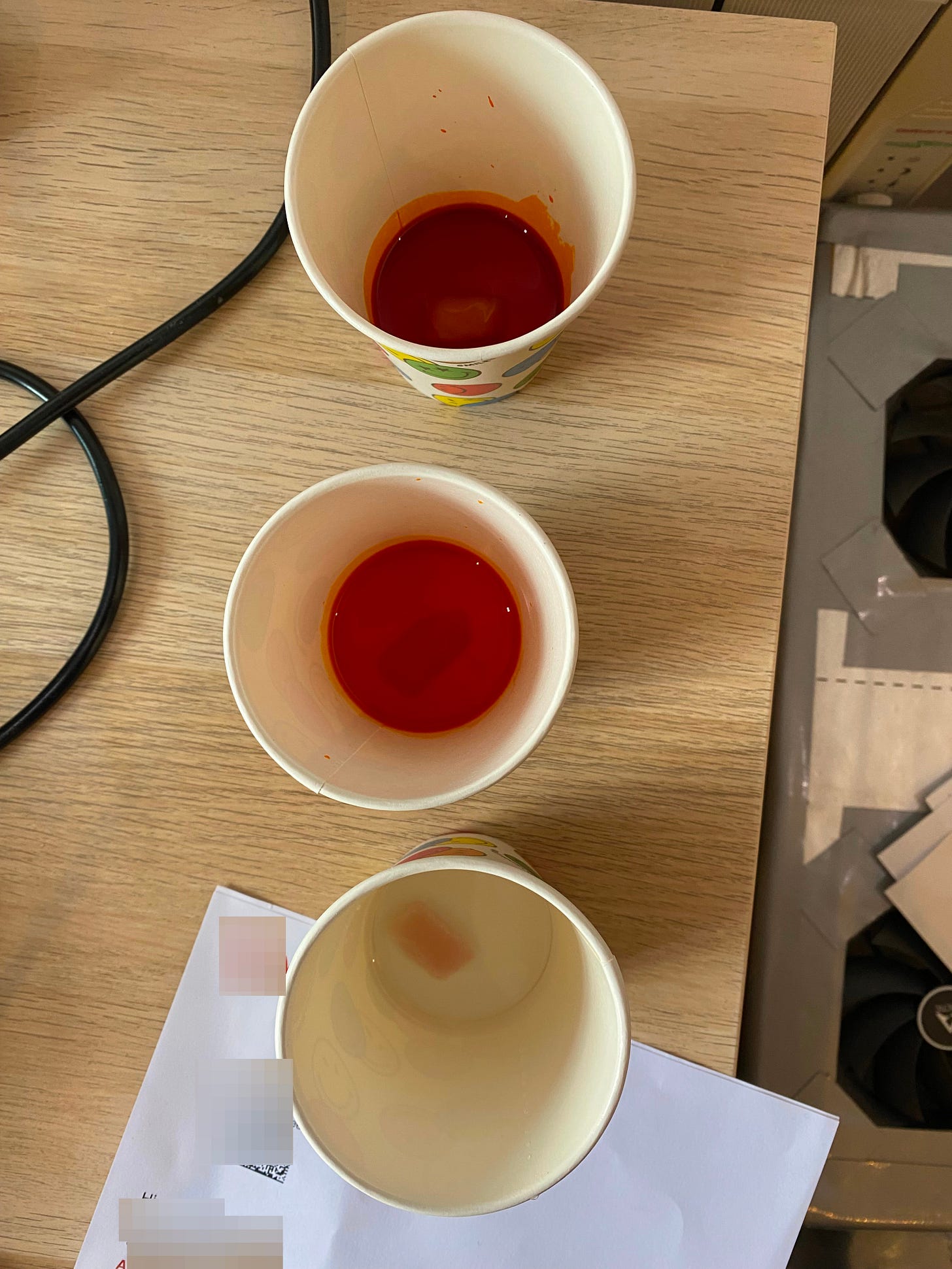
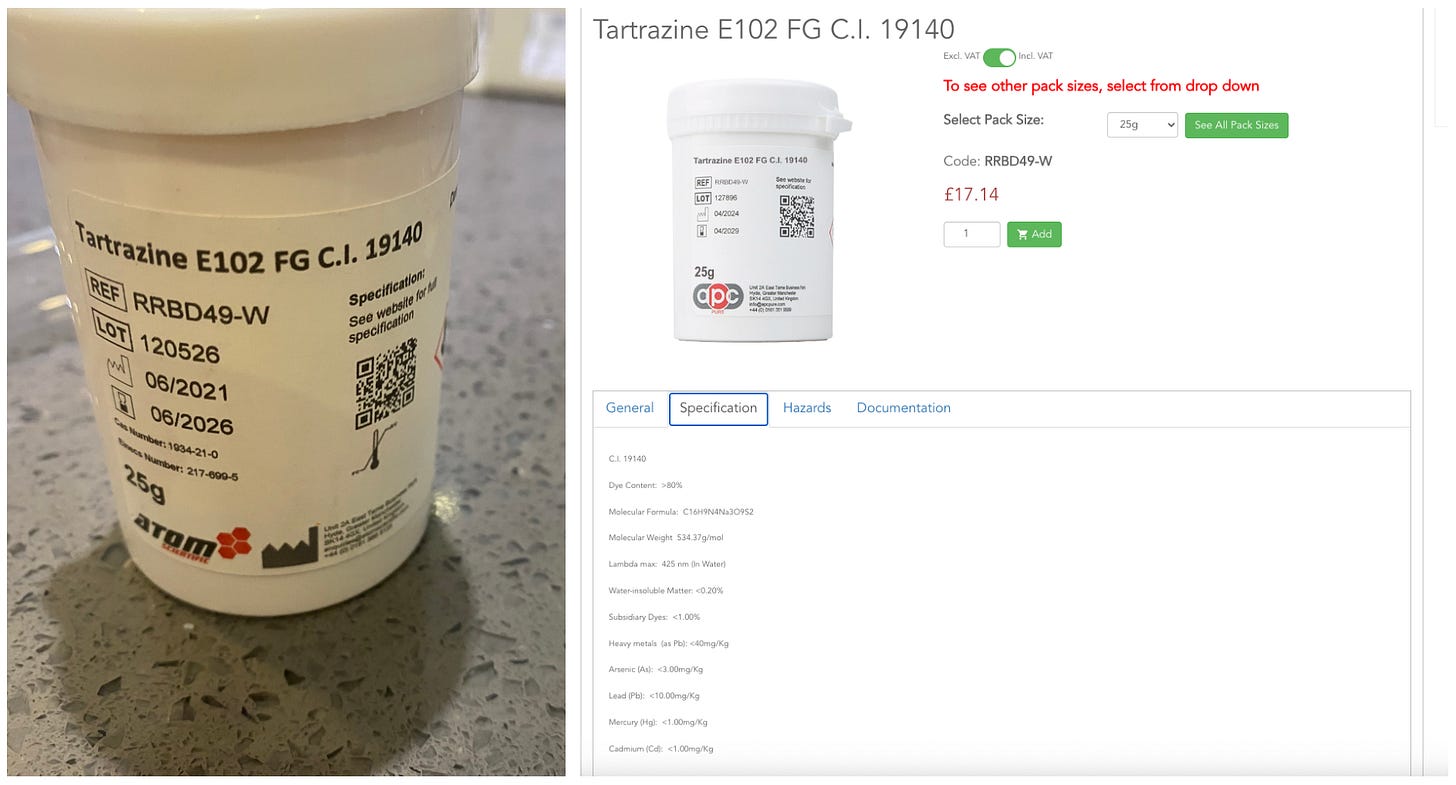
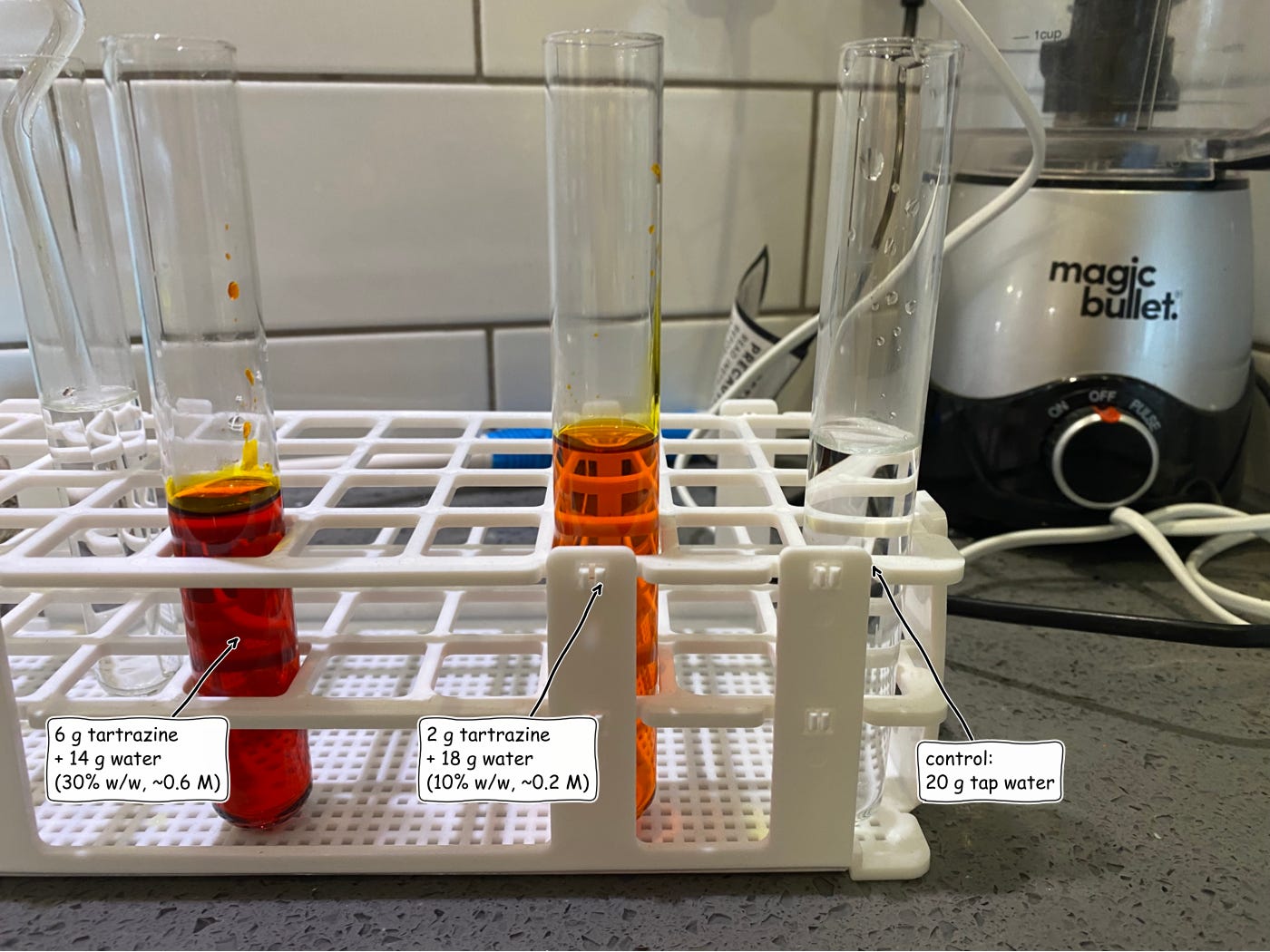
Because the dye powder is only pure, there is some uncertainty regarding the exact molar concentration. I prepared three variations:
| Tartrazine (g) | Tap Water (g) | w/w % | Molality (mol/kg) | Tartrazine (mmol) | Approx. Molarity |
|---|---|---|---|---|---|
Calculation Note: The molar mass of Tartrazine is . Since the powder is dye, true values may be lower.
Material Specifications
The dye used had the following properties:
- Molecular Formula:
- Molecular Weight:
- (in water):
- Dye Content:
- Water-insoluble matter:
- Heavy metals (as Pb):
🛠️ The Process
Experimental Checklist:
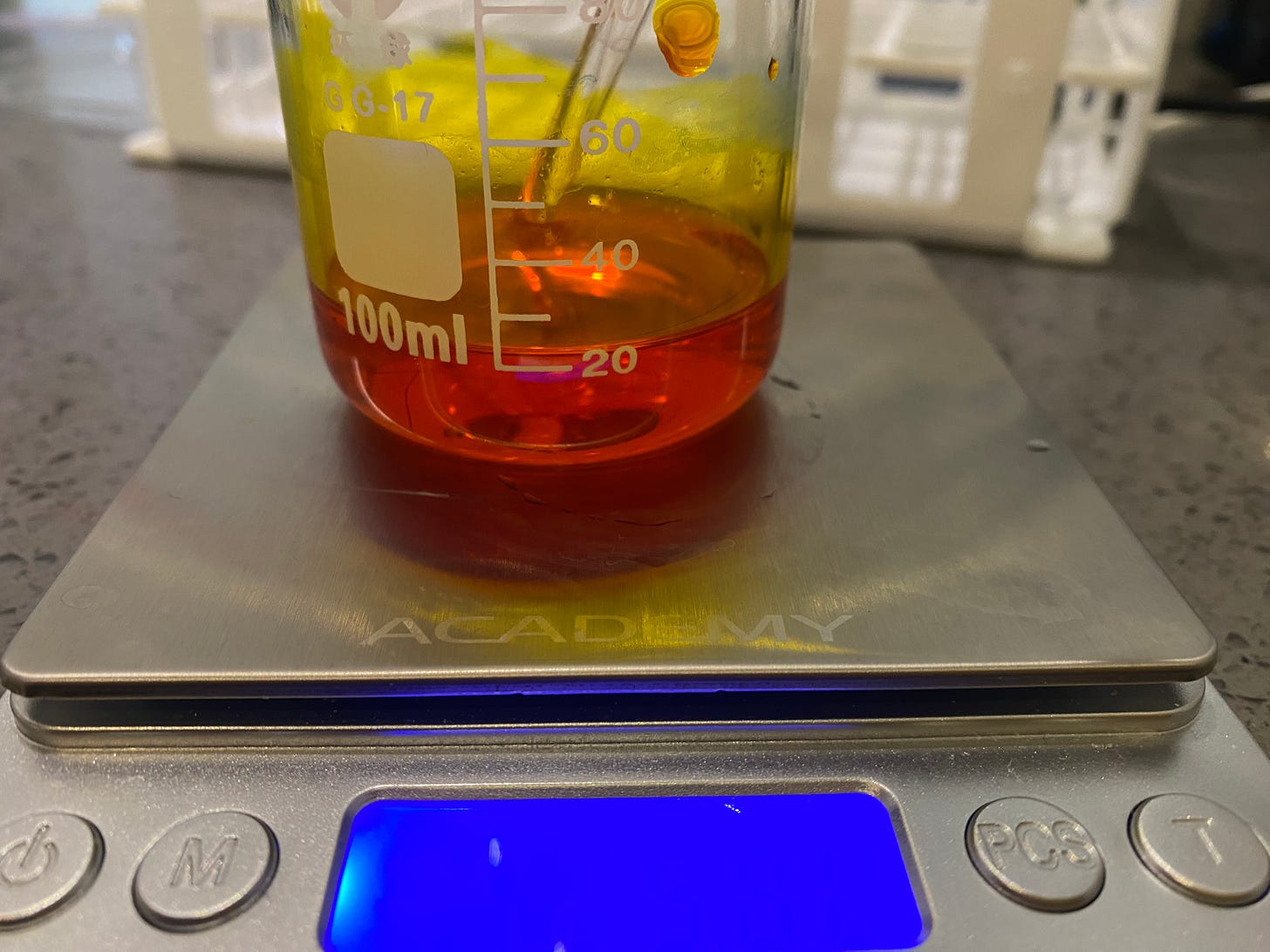
- Use jeweler's scale for precision.
- Mix at room temperature.
- Skip gloves (FDA food safe/no odor).

Results: 6-Hour Soak
- High Concentration (): Failed. The tartrazine appeared to crystallize.
- Medium Concentration (): Success. The chicken looked gelatinous.
🔄 Second Attempt: 12-Hour Soak
I decided to extend the soaking time to 12 hours at room temperature. To avoid the crystallization issue, I omitted the high-concentration solution and focused on the control and the solution.
Safety Adjustment: I placed the chicken in covered test tubes since they were sitting out for a longer duration.
Outcome: While difficult to capture on camera, there was a slight increase in visible translucency compared to the control.
🔭 Broader Implications
This technique is primarily used to facilitate fluorescence imaging in living animals. For the independent scientist, mastering this could open doors to:
- Probing internal biological structures at home.
- Obtaining higher-quality images of tissue architecture.
- Reducing the cost of effective observation.
This aligns with my broader research goals. For instance:
- I previously developed tracing software for Brownian particles using my own microscope.
- I am currently exploring ways to match gas sensing performance using pressure to lower costs.
📚 Appendix: Optical Transparency Theory
If you want to dive deeper into why things are opaque, here are the two primary causes:
1. Absorption
Light rays are absorbed as they pass through a material. If the light is absorbed, it never reaches the eye. The specific wavelengths absorbed depend on the material's spectra.
2. Scattering
Light is "scrambled" due to differences in refractive indices between different components of the material.