The painter behind Manhattan’s Gilded Age interiors
The Forgotten Virtuoso of Manhattan’s Gilded Age
While his name has largely faded from public memory, the brushstrokes of James Wall Finn continue to grace some of the most opulent interiors in New York City. For a man who prioritized the approval of his patrons and peers over general fame, this anonymity is perhaps a fitting legacy.
The Architecture of Integration
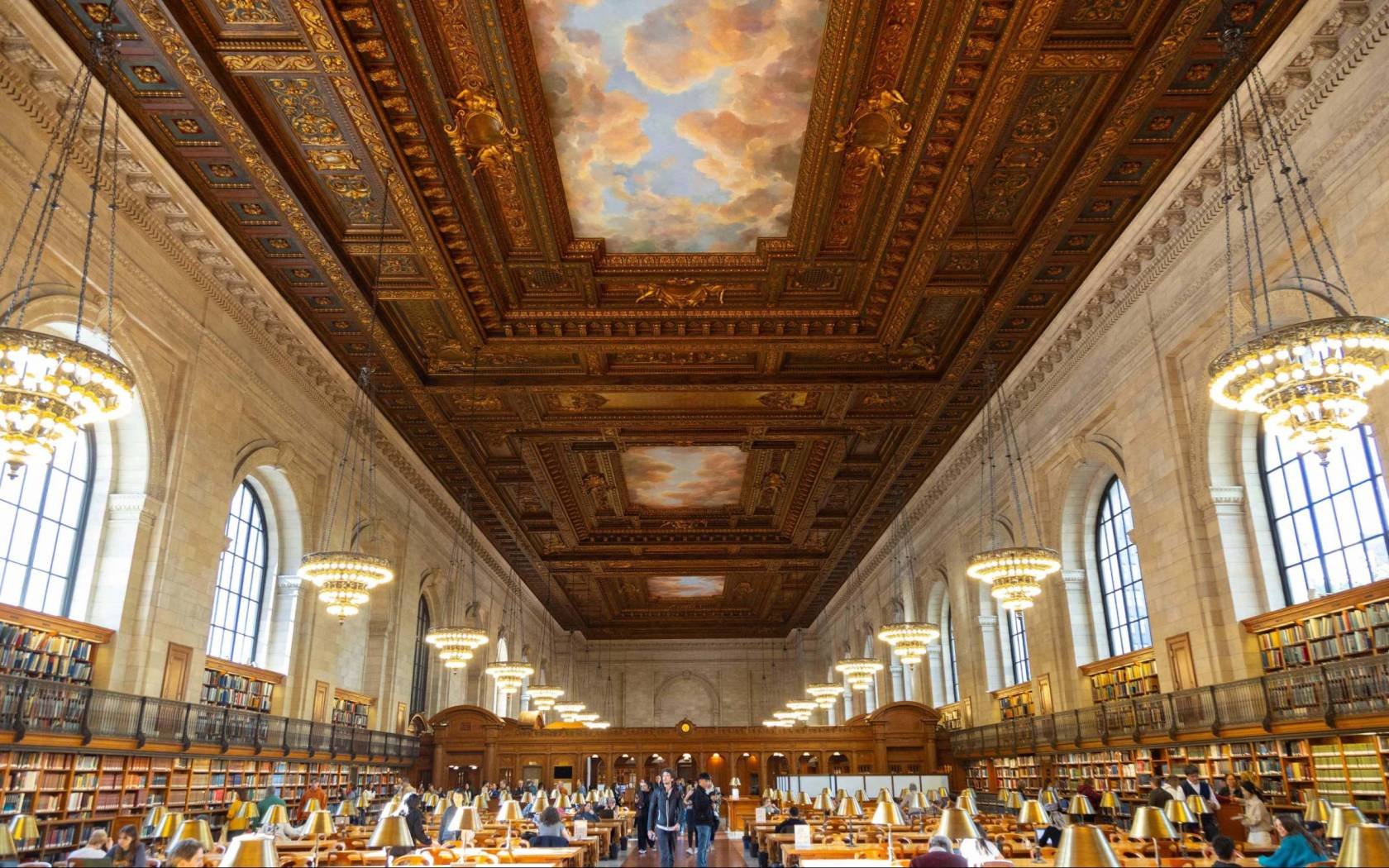
Many visitors to Manhattan's cultural landmarks—such as the Morgan Library, the Lyceum Theatre, Villa Albertine, and the Rose Main Reading Room of the NYPL—are unaware that a single artist is responsible for much of the decorative magic within. Even those who recognize the legendary firms of Carrère & Hastings or McKim, Mead & White, or the wealth of titans like JP Morgan and John Jacob Astor IV, often overlook the human hand behind the gold leaf.
Finn's career coincided with a pivotal shift in American architecture. The leading designers of the era were studying at the École des Beaux-Arts in Paris, where they viewed a building as a (a total work of art).
This philosophy required a seamless collaboration between the architect and the artisan to ensure the interior and exterior felt like a unified whole.
The "Inconspicuous" Master
Finn did not view himself as a "fine artist" in the traditional sense, but rather as a decorative artist. His goal was not to overshadow the architecture but to serve it.
"Its decoration has attracted attention because of its similarity to the work of the best European masters in the one essential respect – its adaptability to and harmony with the architectural features of the building in which it is found." — New York Architect magazine, 1910
Royal Cortissoz, a prominent (and conservative) critic for the New York Tribune, echoed this sentiment in his 1923 volume American Artists. He placed Finn in the same league as Winslow Homer, noting that while Finn's profile remained low, his output was "uncommonly rich in good work."
Artistic Influences
Finn possessed a versatile technique, but he was particularly enamored with the Italian Primitives. He was especially drawn to the rich yet restrained style of Pinturicchio.
The American Renaissance
The wealthy elite of the Gilded Age sought to mirror the Italian patrons of the 15th and 16th centuries. They didn't just want to flaunt their money; they wanted to signal their erudition and sophistication.
Notable Commissions
| Location | Architect | Inspiration/Detail | Status |
|---|---|---|---|
| NYPL Rose Reading Room | Carrère & Hastings | Tiepolo's rosy clouds & clear blues | (Originals lost to water) |
| Villa Albertine | Stanford White | Villa Giulia's putti & grapevines | Preserved |
| Morgan Library (North Room) | - | Giuseppe Cesari's mythological themes | Preserved |
| Morgan Study | Charles McKim | Renaissance breastplate coats of arms | Preserved (Fooled historians) |
| Lyceum Theatre | - | Portraits of David Garrick & Sarah Siddons | Remnants in lobby |
Lost Legacies and Personal Ties
Not all of Finn's work survived the passage of time. Some of his most ambitious projects were destroyed along with the mansions they inhabited:
-
The Seasons mural cycle (JJ Astor's Fifth Ave mansion)Demolished 1926 -
Masque of Flora (Knickerbocker Hotel dining room)Converted to offices
Beyond his professional life, Finn was deeply connected to the arts community. He was a member of The Players, an exclusive club for actors founded by Edwin Booth (the brother of John Wilkes Booth).
Born in New York, Finn's life can be reconstructed through the fragmented records of the press and the memoirs of his contemporaries. He lived from approximately 1866 to 1913, leaving behind a legacy that is hidden in plain sight—woven into the very walls of the city he helped beautify.