Twelve years of distributed SQLite
A Dozen Years of Distributed SQLite
By Philip O'Toole
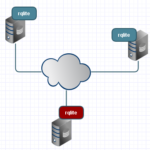
In September 2014, I introduced the world to rqlite. The premise was straightforward: wrap SQLite with a Raft consensus log, replicating every write across a cluster. This ensured that the failure of a single node wouldn't result in catastrophic data loss.
To my knowledge, this was the inaugural open-source project to merge Raft with SQLite. For a long time, it was a lonely endeavor; few others attempted this architecture for several years.
Fast forward to today, and "distributed SQLite" has evolved into a full-fledged industry category. It now encompasses a dozen projects, including several venture-backed firms and two that have been acquired. Because modern narratives of this space usually begin around 2021, I feel it is necessary to document the history starting from 2014.

The Genesis of rqlite
The seed for rqlite was planted while I was working at jut.io. We needed a small relational store for a clustered system, but we couldn't decide which node should be the "owner" of that data. While we eventually took a different path professionally, I continued developing rqlite because the problem was universal and the implementation was elegant.
Technical Evolution
Initially, I utilized goraft (the same library used by etcd and InfluxDB—the latter of which I joined as a core developer). By early 2016, I migrated to Hashicorp's Raft implementation, which remains the backbone of rqlite today.
The fundamental architectural pillar established then remains unchanged:
Writes must be processed by the leader, acknowledged by a majority, and any partitioned minority must reject write attempts.
From this core logic, everything else emerged:
- The
HTTP API - Read-consistency configurations
- Snapshotting mechanisms
Pre-2014 and Contemporaries
For the sake of accuracy, I must acknowledge two other pioneers:
- Expensify: They had been using a Paxos-like protocol to replicate SQLite internally for years, eventually releasing it as Bedrock in 2016.
- ActorDB: An Erlang-based system that provided each "actor" with its own Raft-replicated SQLite database.
While neither saw widespread external adoption, they prove the concept was "in the air." rqlite simply turned this idea into a standalone, general-purpose, open-source tool.
The Timeline of Expansion
2017: The Arrival of dqlite
Canonical developed dqlite to provide an embedded replicated store for LXD and MicroK8s, avoiding the need for a separate etcd instance. Mark Shuttleworth and I actually spoke about potentially using rqlite, but it didn't quite fit their needs.
While dqlite started in Go, it was rewritten in C with a custom Raft library. The primary distinction is packaging:
dqliteAn embedded library.rqliteA standalone server.
2021: Litestream and the "Single Node" Philosophy
Ben Johnson (a former colleague at InfluxDB) launched Litestream. Instead of a cluster, it monitors the SQLite Write-Ahead Log (WAL) and streams it to S3.
"Most applications don't actually need a cluster; they just need a way to recover a single machine if it crashes."
This insight fueled the "SQLite is enough" movement. The distinction is simple:
- Litestream: "What if the machine dies?" (Recovery)
- rqlite: "What if the machine dies and I cannot wait for a restore?" (High Availability)
Later, Ben joined Fly.io and created LiteFS, which handles replication at the filesystem level using Consul leases. This shifted replicated SQLite from a "deployed tool" to a "platform feature." Interestingly, Litestream's approach influenced how rqlite v8.0 handles the WAL.
2022: Divergent Paths
Two new approaches emerged in 2022:
- cr-sqlite: Integrated CRDTs as an extension, allowing multiple writers to diverge and merge without a leader. This targets the (Availability/Partition Tolerance) side of the CAP theorem.
ChiselStrikeTurso: They forked the SQLite engine itself to implement changes the original project wouldn't accept. They built a hosted edge-replica service, raised VC funding, and were acquired by Supabase in 2026.
Simultaneously, SQLite Cloud launched, offering a hosted Raft-replicated service—essentially a cloud-wrapped version of the original rqlite design.
2022 and Beyond: The Platform Era
Cloudflare introduced D1 (serverless SQLite at the edge) and integrated SQLite into Durable Objects. This represents the final transition: replicated SQLite is no longer just "something you run," but "something you buy."
Summary of the Twelve-Year Journey
The evolution of this space can be visualized as a movement across three distinct design philosophies:
Comparison of Approaches
| Approach | Primary Goal | Consistency | Key Projects |
|---|---|---|---|
| Consensus | High Availability | Strong () | rqlite, dqlite |
| Streaming | Disaster Recovery | Eventual/Single-Writer | Litestream, LiteFS |
| Merge | Local-First/Offline | Eventual () | cr-sqlite |
Final Reflections
Looking back, three things are clear:
- The pattern of adding replication outside the SQLite engine has been independently reinvented by at least eight different teams.
- The design space is a triangle of trade-offs: Consensus Streaming Merging.
- Most "database wars" are actually just users arguing over which of these three questions they are actually trying to answer.
Evolution Checklist:
- Standalone Server (
rqlite) - Embedded Library (
dqlite) - S3 Backup (
Litestream) - Edge Replication (
Turso) - Managed Platform (
D1)
-- The essence of the journey
SELECT evolution FROM sqlite_history
WHERE year >= 2014
ORDER BY complexity ASC;