What Adobe v ArtCraft teaches us
Lessons from the Adobe v ArtCraft Saga
By Techbro Nerd | October 24, 2026
AI laboratories engineered a weapon designed to eliminate software engineers (SWEs), but in a twist of irony, the projectile passed straight through their own client base.
For the last three years, the narrative pushed by the major AI model developers has been deceptively straightforward:
- Software engineers are the most expensive line item on a corporate balance sheet.
- Therefore, create an
AI_Software_Engineer. - Sell this tool to corporations.
Collect the salaries that companies no longer have to pay humans.
This logic fueled every massive funding round, the construction of gargantuan data centers, and the optimistic letters sent to investors regarding the "automation of knowledge work." However, this strategy contains a flaw so massive that a fleet of H100 GPUs could fly right through it.
The "Toll Booth" Economy
To understand the failure, we must understand how the software industry actually functioned. It was essentially a toll booth.
Companies like Adobe became wealthy because creating a tool as sophisticated as Photoshop was extraordinarily difficult. It required:
- Hundreds of high-priced specialists.
- Years of iterative development.
- Massive capital investment.
Because the barrier to entry was so high, almost no one could afford to compete. Consequently, Adobe sat at the toll booth, charging every designer on Earth a monthly subscription fee in perpetuity.
The Financial Flow
| Entity | Role | Revenue Source |
|---|---|---|
| Adobe | The Toll Booth | Monthly Designer Subscriptions |
| Engineers | The Builders | Salaries paid by Adobe |
| AI Labs | The Disruptors | Planned to capture those salaries |
The AI labs' grand strategy was to convince the toll booth to fire its human builders and pay the labs for the AI replacement instead. Every cent of the AI business model relied on that toll booth remaining standing.
Bombing the Booth
The fatal error? The AI labs didn't just sell their "robot engineers" to the Adobes of the world. They released the capability to everyone.
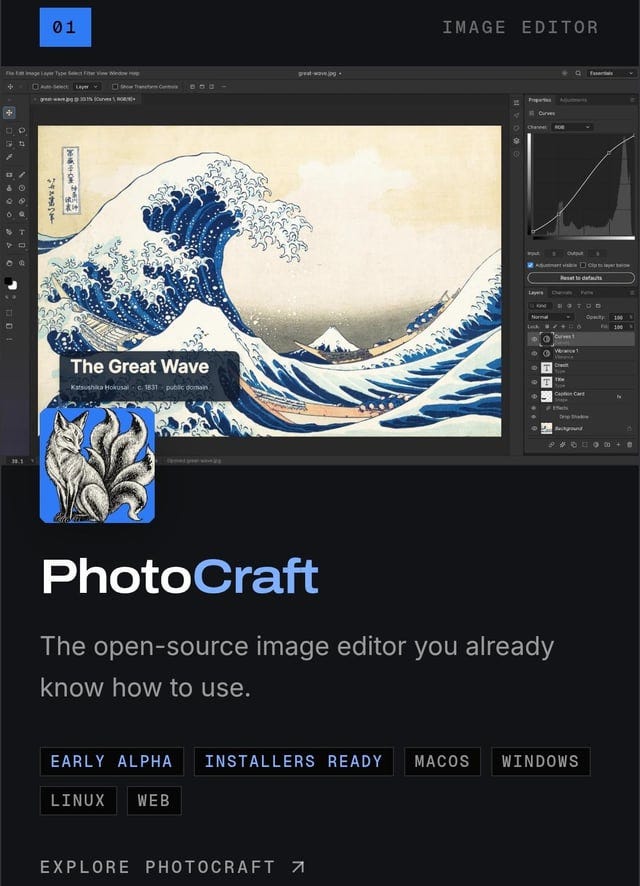
AI is now reverse-engineering complex software and spitting it out as open-source code. In doing so, they are obliterating the business models of the very companies they hoped would be their primary customers. The "moat"—the fact that software was hard to build—has been dissolved in a vat of cheap tokens.
The Cold Reality: A free clone doesn't pay a subscription.
When a creative professional replaces a 0 because they gave it away.
The AI giants failed to realize that their competitors' greatest advantage was the massive overhead required to compete. By lowering that barrier, they handed dynamite to everyone standing outside the gates.
The $20 Delusion
Let's examine the $20/month pricing model. This isn't a sustainable price; it's a loss leader. For power users, the compute cost often exceeds the subscription fee:
The labs are essentially renting out a superhuman intellect for the price of a gym membership. Meanwhile, Alphabet, Meta, and Amazon are projecting nearly half a trillion dollars in capital expenditures for 2026 to build AI infrastructure.
This is a colossal gamble that someone, eventually, will pay "real" money for intelligence. Instead, they are funding the demolition of the customers who were supposed to pay that bill.
The "What Should Have Happened" Checklist
If the labs had prioritized survival, they would have:
- Locked down models entirely.
- Priced "AI Employees" at \approx \150,000/\text{year}$.
- Sold exclusively to the Fortune 500.
- Priced out the weekend hobbyists to prevent cloning.
The Collapse of the Cartel
The "artificial scarcity" dream died on February 24, 2023, when Mark Zuckerberg and the open-source community shattered the cartel. Once Meta released Llama and Chinese labs followed suit, the dam broke.
You cannot maintain a diamond-price cartel when the guy next door is giving diamonds away for free. Open-weight models—many from China—are already capable of cloning software, and once a model is downloaded, it cannot be "un-downloaded."
- Raise prices? Users switch to free models on cheap rented servers.
- Keep prices low? The labs bleed cash while their own product kills their customers.
Historical Echoes of Abundance
History is littered with examples of people who made something precious abundant and then wondered why they were broke.
The Gold Asteroid Paradox: If you fly a rocket to a gold asteroid and bring it back to Earth, you don't become the richest person in history. You crash the global price of gold, and your rocket never pays for itself.
The Silver Crisis: For a century, silver lost its value, causing European prices to skyrocket and bankrupting the crowns that owned the mines.
The De Beers Model: For a century, De Beers controlled the supply of diamonds to keep them expensive. Then, lab-grown diamonds arrived, and the scarcity narrative evaporated.
Open-weight models are the "lab-grown diamonds" of intelligence.
Final Thoughts
I want every AI executive to answer this question without using the word "agentic":
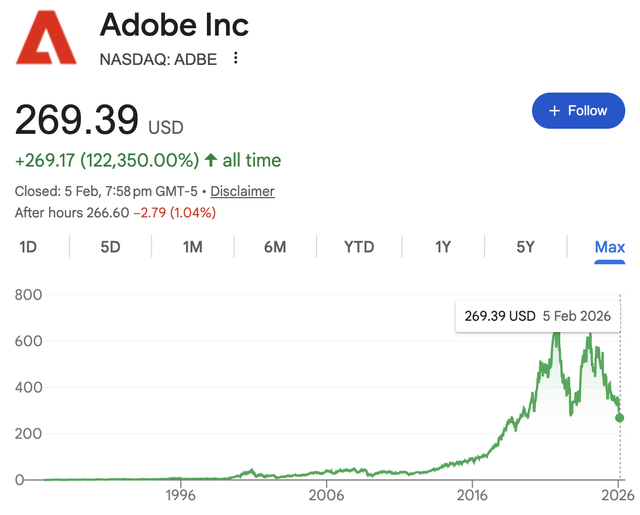
Your plan was to capture the salaries of software engineers from the companies that employed them. Those companies made their money by charging tolls on software that was difficult to build. You gave that power to everyone for the price of a weekly pizza. Now the toll booths are burning, the engineers are gone, and your projected revenue is evaporating into a million free clones.
The AI industry didn't just build a tool to replace workers. It built a machine that converts value into commodity and pointed it directly at the businesses it needed to survive.
It is the most expensive way in history to shoot yourself in the foot.
Related Tool:
Local AI App Run open-source models on your iPhone/Mac for free!
